





A roof leak does not always announce itself with a dripping ceiling or a bucket on the floor.
In many homes, water can enter through a damaged area of the roofing system and remain unnoticed until it begins affecting ceilings, walls, insulation, or the attic. The U.S. Department of Energy notes that moisture entering an attic can damage roof materials, insulation, and areas of the home below.
That is why a roof that looks fine from the ground may still deserve a closer inspection.
If you notice any of the following warning signs, don’t wait for a visible leak to make the decision for you.
1. Water Stains on Ceilings or Walls
Brown, yellow, or discolored areas on a ceiling or wall can be a warning sign of water intrusion.
The location of the stain does not necessarily tell you where the roof is damaged. Water can travel through building materials before becoming visible inside the home.
The EPA specifically advises homeowners not to ignore wet spots or water stains and recommends addressing roof leaks or water damage quickly.
A stain that appears after heavy rain deserves attention—even if it eventually dries.
2. Paint That Is Bubbling, Peeling, or Buckling
Peeling paint is easy to dismiss as an aging interior finish.
But when it appears near a ceiling, exterior wall, or around an area vulnerable to water intrusion, moisture may be involved.
The EPA’s home guidance includes buckling and peeling paint as a possible sign of water from a roof leak reaching a wall.
Painting over the problem won’t solve the underlying cause. The source of the moisture needs to be identified first.
3. Damp or Wet Insulation in the Attic
Your attic can reveal problems that aren’t visible from inside your living spaces.
Wet insulation, particularly around the eaves, can indicate water intrusion. The U.S. Department of Energy identifies wet attic insulation as one of the signs of possible water intrusion.
Moisture in the attic can also reduce the effectiveness of insulation and contribute to deterioration of roofing materials.
If insulation feels damp or you notice signs of moisture, it’s worth having the roof and attic area evaluated.
4. Musty Odors or Visible Mold
A musty smell doesn’t automatically mean you have a roof leak, but it shouldn’t be ignored—especially when combined with other signs of moisture.
Mold requires moisture to grow. The EPA recommends fixing the source of water and drying wet materials promptly rather than simply treating the visible mold.
If moisture is coming from the roof, repairing the underlying roofing problem is an important part of addressing the source.
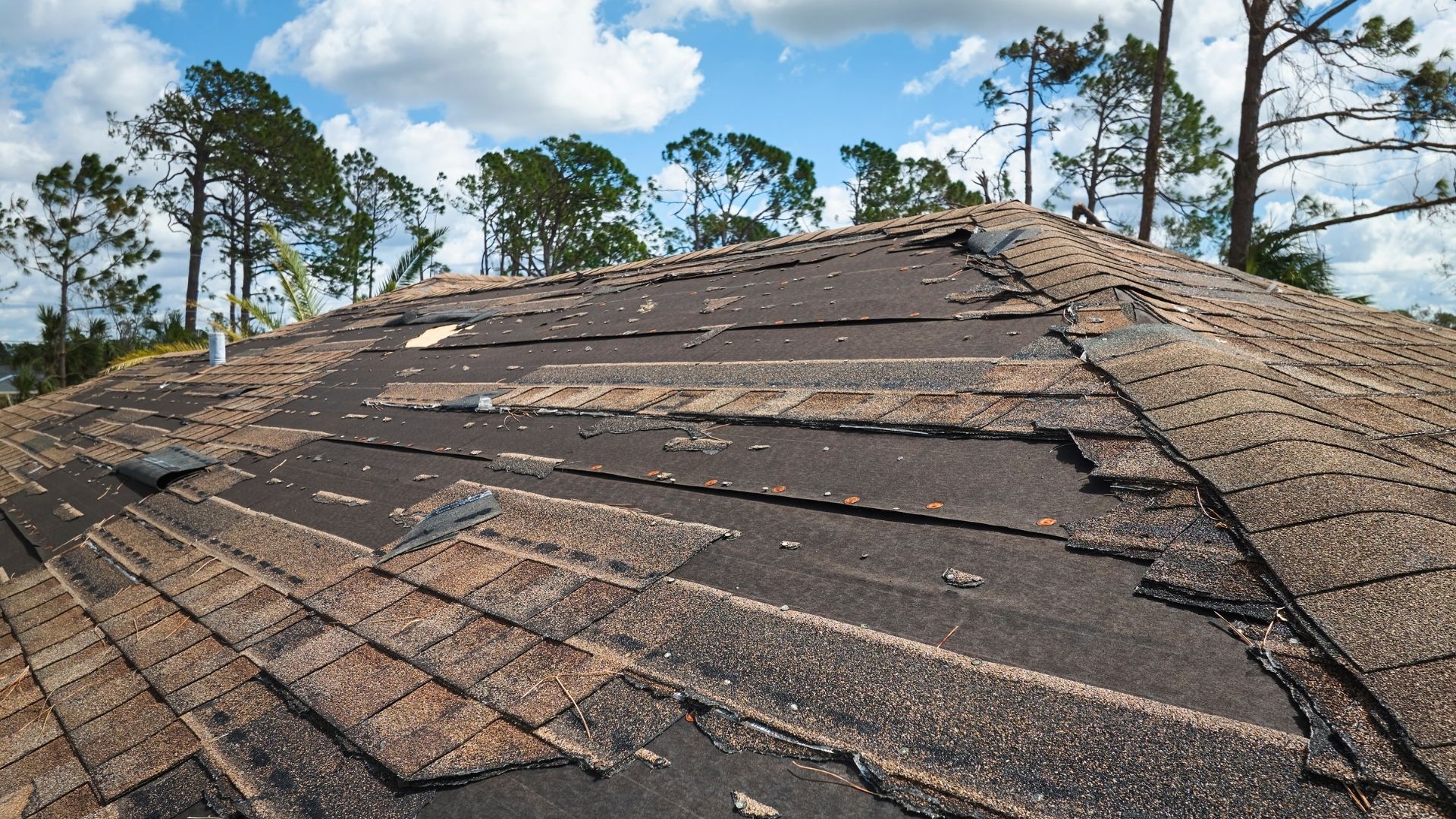
5. Damaged or Deteriorating Roof Materials
Some warning signs can be seen from outside.
Look for:
- Missing or damaged shingles
- Warped areas
- Deteriorated flashing
- Damaged roof edges
- Visible areas where roofing materials appear worn
These conditions don’t automatically mean your roof needs to be replaced. However, they are reasons to have the roofing system evaluated before a small defect becomes a larger source of water intrusion.
6. Water Damage Appearing Far From the Roof Problem
This is one of the reasons diagnosing roof leaks can be difficult.
You may notice a water stain in a bedroom while the actual entry point is somewhere else on the roof.
Water can move along roof decking, framing, and other building components before it reaches the interior surface where you finally see it.
That’s why simply sealing the area directly above a ceiling stain may not address the real problem.
A professional inspection can help determine where water is entering and what needs to be repaired.
7. Problems That Appear or Get Worse After Rain
Pay attention to when you notice the problem.
A ceiling stain that becomes darker after rainfall, damp attic materials following a storm, or recurring moisture around the same area can indicate that water is entering from outside.
The longer a water problem continues, the greater the opportunity for moisture to damage materials. The EPA emphasizes fixing water problems promptly because prolonged dampness can contribute to mold growth and damage.
Waiting for a large, obvious leak is not a good inspection strategy.
What Should You Do If You Notice These Signs?
The first step is not necessarily replacing the entire roof.
It is finding out what is actually happening.
A professional roof inspection can help determine whether the problem is related to damaged shingles, flashing, roof penetrations, drainage, ventilation, or another part of the roofing system.
Depending on the findings, the appropriate solution may be a targeted roof repair rather than a complete replacement.
At A&R Roof Services LLC, the goal is to identify the condition of your roofing system and recommend the appropriate course of action—not to make homeowners guess about what’s happening above their heads.
With more than 22 years of roofing experience, A&R Roof Services LLC provides professional roof inspections and repairs for homeowners who want to address problems before they become more expensive.
Don’t Wait for the Bucket
A visible leak is not the only reason to have your roof checked.
If you’ve noticed water stains, peeling paint, damp attic insulation, musty odors, damaged shingles, or recurring moisture after rain, the safest approach is to investigate the source before the damage has more time to spread.
Don’t wait until a hidden problem becomes an emergency. Contact A&R Roof Services LLC at 301-974-7059 to schedule your free roof inspection.